
Ongoing fatigue, poor sleep, body aches, and low energy are common concerns for many adults. While these symptoms can have several causes, diet and sleep habits are two areas that may influence how the body responds over time.
Understanding how to reduce chronic inflammation through everyday habits is a practical starting point. It does not replace medical care, but it can support overall health when combined with regular GP review.
What Is Chronic Inflammation?
Inflammation is a normal part of how the immune system responds to injury or infection. In the short term, it is helpful and necessary. Chronic inflammation is different. It refers to a low-grade, ongoing inflammatory response that may persist without an obvious cause.
Research suggests long-term inflammation may play a role in several health conditions, including heart disease, Type 2 Diabetes, arthritis, and metabolic health concerns. Most people with chronic inflammation do not realise it is present because the symptoms can be subtle, including fatigue, joint stiffness, digestive discomfort, and poor recovery from illness or physical activity.
Can Diet and Sleep Help Reduce Chronic Inflammation?
Yes, healthy eating patterns and consistent sleep may help support immune and metabolic health. However, they do not replace medical assessment, and a GP should review any persistent symptoms.
Research suggests that dietary patterns and sleep quality can influence inflammatory markers in the body. People who eat more whole foods and sleep more consistently tend to show lower levels of inflammation-related indicators over time. These are not guaranteed outcomes, but they represent practical areas where lifestyle changes may make a difference.
Foods That May Support Lower Inflammation
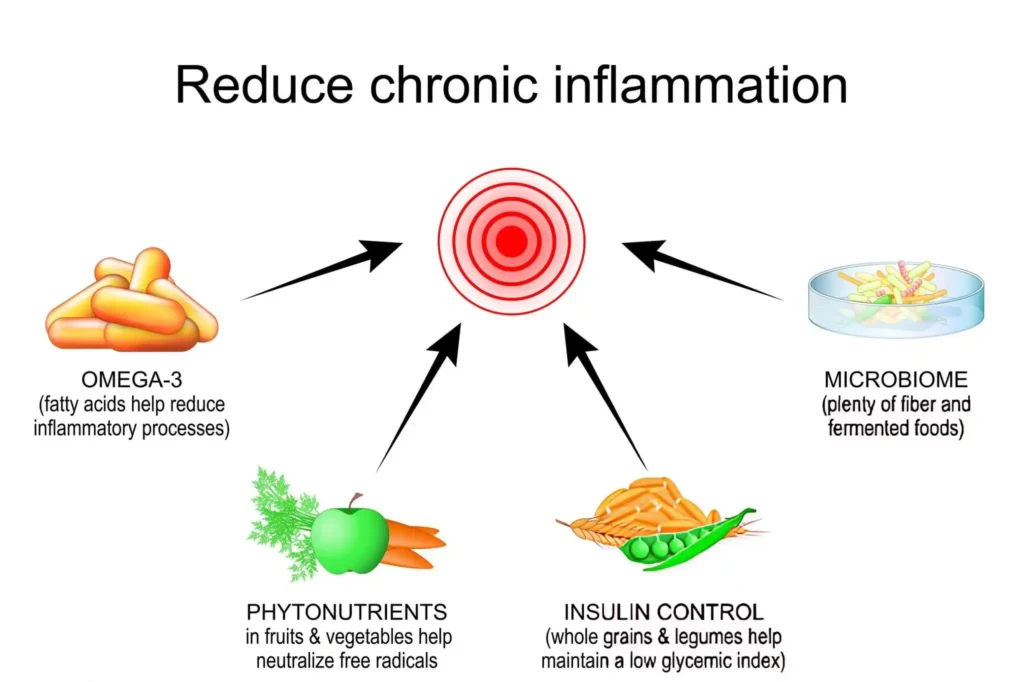
Certain eating patterns have been associated with a lower risk of inflammation in population-based studies. The Mediterranean-style and DASH eating patterns are two examples commonly referenced in Australian preventive health guidance.
Foods commonly included in these patterns are:
- Vegetables and fruit, eaten in variety and quantity
- Wholegrains such as oats, brown rice, and wholemeal bread
- Legumes including lentils, chickpeas, and beans
- Nuts and seeds in moderate amounts
- Olive oil as a primary cooking and dressing fat
- Oily fish such as salmon, sardines, and mackerel
- Water as the primary drink while reducing sugary beverages where possible
No single food will reduce inflammation on its own. The overall pattern of eating across the week matters more than any one choice.
Foods and Habits That May Increase Inflammation Risk
Just as some foods may support lower inflammation, others have been associated with higher inflammatory markers when consumed regularly and in large amounts.
Habits worth reducing where possible include:
- High intake of ultra-processed foods such as packaged snacks and fast food
- Sugary drinks including soft drinks and energy drinks
- Excess alcohol consumption
- Low fibre intake from a diet lacking vegetables, fruit, and wholegrains
- Frequent reliance on takeaway meals as a main food source
These habits do not cause disease in isolation, and occasional choices are unlikely to cause harm. It is the consistent pattern over weeks and months that tends to matter most.
Why Sleep Matters for Inflammation and Recovery
Sleep is often overlooked when people think about inflammation and health. However, the connection is significant. Poor sleep can affect immune function, hormonal balance, appetite regulation, and the body’s ability to recover from daily physical and mental demands.
Healthdirect Australia notes that adults generally need seven to nine hours of sleep per night for good health. Consistently sleeping less than this may be associated with increased stress hormones and reduced immune resilience over time.
Key ways poor sleep may affect health include:
- Increased cortisol and stress hormone levels
- Reduced ability to regulate appetite, often leading to higher calorie intake
- Lower energy and motivation for physical activity
- Slower physical recovery from exercise or illness
- Greater difficulty managing blood sugar levels
Simple Sleep Habits That Support Better Health
Improving sleep does not always require major changes. Consistent habits tend to produce better results than occasional attempts.
Practical steps that may help:
- Set a consistent sleep and wake time, even on weekends
- Reduce screen use in the hour before bed
- Keep the bedroom dark, quiet, and slightly cool
- Limit caffeine intake after midday
- Develop a short wind-down routine such as reading or a warm shower
- Manage stress through light movement, breathing, or conversation before bed
If sleep problems persist despite these measures, discussing them with a GP is worth considering, as sleep disorders such as sleep apnoea can significantly affect health and may need further assessment.
When Inflammation Symptoms Need a GP Review
Lifestyle changes are a useful starting point, but some symptom patterns suggest a medical review is more appropriate than continued self-management.
Consider speaking with a GP if you experience:
- Fatigue that has lasted several weeks without improvement
- Joint pain, swelling, or stiffness that interferes with daily tasks
- Unexplained weight change over a short period
- Poor sleep that does not improve with lifestyle adjustments
- Digestive symptoms that are ongoing or worsening
- Symptoms that are affecting work, parenting, or daily routine
- An existing chronic condition that is becoming harder to manage
If fatigue, poor sleep, joint discomfort, or other symptoms continue, a GP review may help assess possible contributing factors and whether further investigation is appropriate.
What a GP May Check
A GP will not assume lifestyle habits are the only contributing factor. Assessment looks at the full picture.
During a consultation, a GP may review:
- Medical history and current medications
- Sleep patterns and lifestyle habits
- Blood pressure and cardiovascular risk factors
- Blood sugar and cholesterol levels
- Iron, thyroid, or vitamin levels where clinically appropriate
- Signs of chronic disease or metabolic risk
- A follow-up plan based on findings
Patients who would benefit from ongoing monitoring may be supported through chronic disease management to help track progress and adjust care over time. Where relevant, pathology and blood tests can provide clearer information about inflammation-related markers and other health indicators.
Depending on your symptoms and medical history, a GP may recommend a broader health review to better understand whether underlying health factors may be contributing to ongoing symptoms.
A Realistic Starting Plan for Diet and Sleep
Rather than overhauling everything at once, small consistent changes tend to be more sustainable.
A simple starting plan might look like:
- Add one extra serve of vegetables to one meal each day
- Replace one sugary drink with water
- Set a consistent bedtime and aim to keep it for two weeks
- Walk for 20 minutes most days, even gently
- Stop caffeine after midday and see whether sleep improves
- Book a GP review if fatigue, joint pain, or poor sleep continue after a few weeks
These steps are not a treatment. They are practical habits that may support better health over time when combined with appropriate medical care.
Conclusion
Diet and sleep both play a role in how the body manages ongoing stress and recovery. Improving these habits may support immune health, energy, and long-term wellbeing. However, chronic symptoms such as fatigue, joint pain, or poor sleep should not be managed by lifestyle changes alone if they persist.
If symptoms such as fatigue, poor sleep, or ongoing body aches continue, speaking with a GP can help determine whether further assessment or personalised health support may be appropriate.
FAQs
Can diet reduce chronic inflammation?
Healthy eating patterns may help support immune and metabolic health over time, but they do not replace medical care. A GP can help assess whether diet changes are appropriate alongside other treatment.
What foods are best for inflammation?
Vegetables, fruit, wholegrains, legumes, nuts, seeds, olive oil, and oily fish are commonly included in eating patterns associated with lower inflammation markers. No single food works in isolation.
Can poor sleep make inflammation worse?
Poor sleep may affect immune function, stress hormones, appetite, and recovery. Consistently poor sleep has been associated with higher inflammatory markers in population studies.
When should I see a GP about inflammation?
Consider a GP review if fatigue, joint pain, swelling, poor sleep, or digestive symptoms persist for several weeks or affect daily life.
Can blood tests show inflammation?
Some blood tests may help assess inflammation-related markers and other health factors. Results are interpreted alongside symptoms, history, and clinical examination, not in isolation.
Sources and further reading
Healthdirect Australia — Sleep
Healthdirect Australia — Healthy eating
RACGP — Preventive activities in general practice