
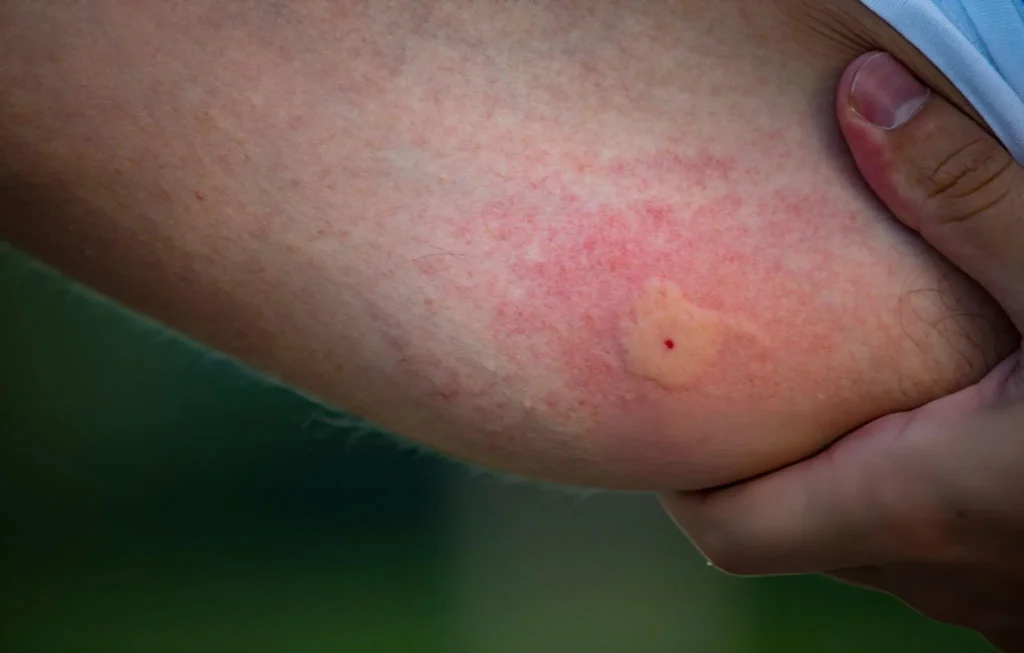
Insect bites often cause itching, redness, swelling or a raised bump on the skin. Most uncomplicated bites settle with simple care within a few days. Some reactions need medical assessment, and a few are emergencies. This guide covers common symptoms, home treatment, signs of infection and when to see a GP.
Key Takeaways
- Most mild bites cause temporary itching, swelling or redness
- Different insect bites can look very similar
- Washing and cooling the area can ease uncomplicated symptoms
- Increasing pain, warmth or spreading redness may need GP assessment
- Severe allergic reactions need emergency help through Triple Zero (000)
What Are the Common Symptoms of Insect Bites?
Insect bites commonly cause itching, a raised bump or welt, redness or discolouration, swelling and mild pain. Some bites form a small blister. Reactions vary between people and depend on the insect and how your skin responds.
On brown or darker skin, redness can be harder to see. Look for warmth, tenderness and swelling as well as colour changes.
A larger local reaction can cause noticeable swelling without being infected. Size alone does not confirm infection or allergy.
What Do Mosquito, Flea and Bed Bug Bites Look Like?
Different insects can leave similar marks, so appearance offers clues rather than answers.
- Mosquito bites: itchy, raised bumps or welts, often on exposed skin
- Flea bites: small itchy bumps, sometimes grouped around the ankles and lower legs. Pets can be a clue.
- Bed bug bites: itchy bumps sometimes appearing in clusters on exposed skin. Blood spots or dark marks on bedding may suggest bed bugs are present.
Bite patterns overlap, and a photo cannot reliably confirm the cause. Ticks and spiders are not insects, and their first aid is different. Seek specific advice for those bites.
How Can You Treat Mild Insect Bites at Home?
Most mild bites can be managed with simple steps. These follow Australian first-aid advice for insect bites and stings from Healthdirect.
- Wash the area gently with soap and water.
- Apply a cool compress, or a cold pack wrapped in a cloth, for short periods.
- Try not to scratch, as broken skin can let germs in
- Ask a pharmacist about options for persistent itching, such as antihistamines or topical treatments
- Keep an eye on the area as it settles
Suitable medicines depend on age, pregnancy, medical history and other medicines you take. A pharmacist can guide you. Home care eases symptoms, but results vary between people.
How Can You Tell if an Insect Bite Is Infected?
An insect bite may be infected if pain, warmth, swelling or redness increases rather than improves, particularly if the person also feels unwell. Possible signs include:
- Redness or discolouration that is increasing or spreading
- Warmth and swelling around the bite
- Worsening tenderness or pain
- Pus or discharge
- Fever or feeling unwell
Scratching can break the skin and raise the risk of infection. These signs can overlap with other skin reactions, so a GP may need to examine the area to find the cause. A large itchy reaction is not automatically an infection, and not every swollen bite needs antibiotics.
When Should You See a GP for an Insect Bite?
Most mild bites do not need a GP visit. Consider an assessment if:
- Symptoms are worsening or not improving as expected
- The area is becoming more painful, warm or swollen
- You suspect infection
- You have a fever or feel unwell
- The reaction is unusually large, painful or lasting
- A child is very distressed or unwell
- You have a condition, such as diabetes, that can affect infection risk or healing
A GP can examine the area, ask about the bite and possible exposure, assess for infection or another skin condition, and discuss treatment if needed. Rapidly worsening symptoms, such as quickly spreading redness with fever, may need urgent assessment rather than a routine booking.
If a bite is becoming more painful, swollen or irritated, A general medicine consultation at Huntlee Healthcare can help work out whether infection or another reaction is involved.
When Is an Insect Bite or Sting an Emergency?
A severe allergic reaction, called anaphylaxis, is a medical emergency. Call Triple Zero (000) if someone develops:
- Difficulty or noisy breathing
- Swelling or tightness of the tongue or throat
- Persistent dizziness or collapse
- Sudden wheezing or persistent coughing
- Abdominal pain or vomiting following an insect sting, even without a previously diagnosed allergy.
If anaphylaxis is suspected, lay the person flat and do not allow them to stand or walk. If breathing is difficult, they may sit with their legs outstretched. Give an adrenaline device immediately if available, then call Triple Zero (000) for an ambulance. Follow their ASCIA Action Plan if they have one. Anaphylaxis can occur without a skin rash.
What if Your Child Has an Insect Bite?
Children can develop itchy, swollen bumps after bites, and reactions vary. Keep the area clean, discourage scratching and ask a pharmacist about products suitable for your child’s age.
Seek medical advice if your child is very distressed, unwell, or the bite is worsening. Parents can discuss concerns through Huntlee Healthcare’s children’s health services.
How Can You Prevent Insect Bites?
- Wear long, loose clothing outdoors.
- Use a repellent containing an evidence-supported ingredient such as DEET or picaridin, and follow the label, especially for children.
- Use insect screens and remove standing water around the home
- Take extra care outdoors when mosquitoes are active
For people around Huntlee and North Rothbury who garden or work outdoors, these habits are worth building into everyday routines.
Knowing When to Seek Help With Insect Bites
Most insect bites cause a short-lived reaction that settles with home care. Symptoms that are worsening or lingering deserve assessment, and emergency symptoms need immediate action.
If a bite is not improving or is becoming more concerning, you can arrange a GP appointment with Huntlee Healthcare to discuss appropriate next steps.
FAQs
How long do insect bites usually last?
Most uncomplicated bites improve within a few days. Healing time varies between people and between bites.
Can an insect bite become infected?
Yes. Scratching or broken skin can allow infection. Increasing pain, warmth or spreading redness may need GP assessment.
Why is my insect bite so swollen?
Local reactions vary a lot. Large swelling does not always mean infection, but swelling that worsens alongside pain or warmth should be assessed.
Can you identify an insect bite from a photo?
Photos may offer clues, but appearance alone cannot reliably identify the insect or diagnose the reaction.
References and further reading
Healthdirect Australia: Insect bites and stings
The Royal Children’s Hospital Melbourne: Insect bites and stings
ASCIA: First aid for anaphylaxis
NSW Health: Bite prevention